

This article has been created using AI, of course. We are an agency that harnesses the power of AI to create scalable content, keeping quality at the top, as we have done for 15 years. However, we are not naïve. Before we asked an AI copywriting tool to write content, we did a little research on the top 5 Google results.
The AI final work? Honestly, pitiful. The same advices, ideas and recommendations all over the place. And the worst …. The first result was literally a rehash of what the tools offered us! This little experiment helped us to validate several theories, starting with creating our own structure drafts instead of asking an AI tool for them.
What does this have to do with SEO? Quite easily, lack of originality, among other things. If the tools tend to give you the best answer they can find in Google and that answer has very little originality, the result will be mediocre.
Because we don’t want to give you mediocre content, we’ve taken those results and improved them. Hopefully they will help you to really, truly, get original and practical ideas and recommendations.
This is what we will look at in this article about AI-Generated Content for SEO:
Understanding AI-Generated Content for SEO
AI-generated content refers to text, images, or media produced by artificial intelligence tools, typically based on existing data sets and algorithms. These tools, like ChatGPT, Jasper, or Copy.ai, are trained on vast amounts of online content, which allows them to generate coherent articles, blog posts, and even social media copy. The primary appeal of AI-generated content is speed and efficiency, as it can produce massive amounts of material in a fraction of the time it would take a human writer.
However, the question remains: How does AI-generated content impact SEO? To answer this, we need to explore both the opportunities and risks involved when using AI for content creation.
One of the key benefits of AI tools is their ability to speed up the content creation process while maintaining consistency. AI can help brands produce frequent, relevant content, which is crucial for ranking higher on search engines.
Additionally, AI tools can generate keyword suggestions and outline structures, saving time during the planning phase.
On the flip side, the main challenge with AI-generated content is originality. Since these tools pull from existing material across the web, the output might lack unique perspectives or insights, potentially resulting in duplicate content. Google’s algorithms prioritize original and valuable content, and simply using AI without a human touch could lead to penalties if the content is seen as regurgitated or unhelpful.

In essence, while AI-generated content can serve as a powerful tool in your SEO strategy, its effectiveness hinges on how it’s used. The key to success is blending AI capabilities with human oversight to create content that is not only optimized for SEO but also valuable and engaging for your audience.
The Risks of AI-Generated Content for SEO
As much as AI-generated content promises efficiency and scalability, it comes with significant risks that can directly impact your SEO strategy. Understanding these risks is crucial for marketers and businesses looking to maintain their ranking while using AI tools.
Lack of originality and potential for duplicate content
One of the biggest challenges with AI-generated content is its reliance on existing data, which often leads to duplicate content. Since AI tools pull from the same pool of online information, there’s a risk that multiple websites could end up publishing similar, if not identical, content.

Factual Inaccuracies and Outdated Information
AI tools like ChatGPT and Jasper, while effective, are limited by the data on which they were trained. For instance, ChatGPT’s knowledge cuts off in 2021, which means it could provide outdated or incorrect information if not manually checked.
Publishing inaccurate content not only risks damaging your credibility but also makes your site less useful to users, which could harm your SEO performance.
Lack of Human Touch and Emotional Engagement
Another significant drawback of AI-generated content is its lack of emotional intelligence and creativity. While AI can mimic human language, it cannot replicate the nuance, humor, or empathy that real human writers bring to content. This can lead to a flat, impersonal tone that fails to engage your audience.
For businesses trying to build connections and trust through storytelling or sales copy, this lack of depth can negatively affect user engagement metrics, which are important factors in SEO.
And beyond SEO, you should not lose sight of the fact that when you create content your main goal is to engage your audience. Soulless text will NEVER get you any closer to achieving this.
Inconsistencies in Tone of Voice
Competition is getting fiercer by the day, no matter what sector you are in. AI-generated content tools have democratised content generation, leaving aside your brand’s tone of voice for the sake of blogging or social media.
The result? Thousands of blogs, social media posts and similar, personality-less images that scream AI! from all four sides.
If you don’t want this to happen to your brand, we have a couple of ideas that we’ll share below. Read on to find out.
With humanized IA content and start positioning your brand in search engines.
Lack of Strategy
Publishing without a strategic approach is one of the biggest mistakes when it comes to SEO. AI tools can help you scale your content, but if a strategy to guide them is like leaving a monkey in charge of your marketing department, don’t expect great results.
Potential for Copyright Issues
AI-generated content can unintentionally borrow too much from its training data, raising concerns about plagiarism and copyright infringement. While Google doesn’t directly penalize AI-generated content, it does reward original and authoritative content. Failing to check for potential plagiarism could lead to penalties or legal issues, further damaging your SEO strategy.
Despite these risks, AI content is not inherently bad for SEO. However, to avoid negative consequences, it’s crucial to implement best practices like thorough editing, fact-checking, and adding a human touch.
The Benefits of AI-Generated Content for SEO
If you’re on this blog, it’s because you want to use the power of AI to scale your content strategy, so we don’t need to tell you about its benefits.
However! If you’re a college student (hello 👋) looking for text to paste into a presentation (you’re going to get caught, and you know it), here are some ideas of the benefits of AI-generated content for SEO.

Speed and Efficiency in content creation
One of the most appealing benefits of AI content tools is the ability to produce high volumes of content quickly. For businesses that need to post regularly to maintain or improve their SEO rankings, AI tools provide a scalable solution. Whether you need blog posts, product descriptions, or social media updates, AI-generated content helps brands meet the demand for consistency, which is crucial for SEO performance.
Again, don’t forget about the human touch, do you want a SEO optimizaed copy or also an master piece of content? Is up to you.
Improved Keyword Research and Optimization
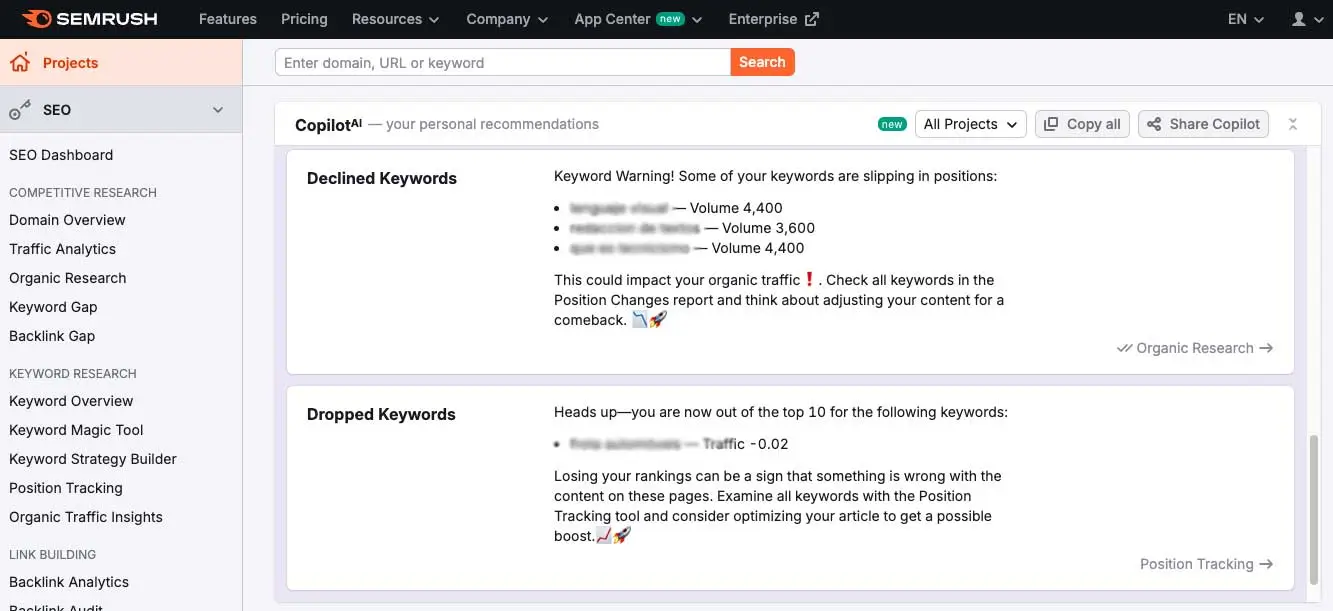
AI tools are highly effective in streamlining the keyword research process, which is essential for SEO. They can generate relevant keyword ideas based on core terms, helping you optimize your content for both primary and long-tail keywords. By integrating AI-powered keyword research tools, marketers can quickly identify and use trending terms that improve content visibility. AI can also suggest semantic keywords, which play a significant role in aligning content with Google’s algorithms.
Content Ideation and Outline Creation
AI tools are particularly useful during the brainstorming phase. They can quickly generate ideas for articles, blog posts, and even social media content. This saves marketers valuable time that would otherwise be spent figuring out what topics to cover. AI can also create detailed content outlines, giving human writers a framework to build from while ensuring the content stays aligned with SEO best practices.
Note: we recommend that you ask an AI tool to write a draft for you and customise it with your own expertise on the topic. I’m sure you know more than an AI tool, remember that content generation is based on a data model coming from the internet and there is a lot that is not on the internet!
Enhancing SEO through multilingual content
For businesses with a global presence, creating content in multiple languages is often a necessity. AI tools like Google Translate or DeepL can help generate content in different languages efficiently, making it easier to reach international audiences. This multilingual capability is a major asset for brands looking to expand their SEO reach without significantly increasing costs.
But beware, as our CEO Carmen Díaz Soloaga shared on LinkedIn a few days ago, AI translation tools tend to reduce text quality, especially in languages with few resources. The result? The Internet is full of translated content that leaves much to be desired (up to 40%).

Best Practices for Using AI Content Without Hurting SEO
To effectively leverage AI-generated content without damaging your SEO, it’s essential to follow certain best practices. These strategies help ensure that the content remains high-quality, useful, and aligned with search engine guidelines. Below are key approaches to optimizing AI content for SEO success.
Always add human review and editing
One of the most important rules when using AI-generated content is not to rely on it as a final product. AI can produce factual inaccuracies, outdated information, or awkward phrasing, which can hurt your SEO if left unchecked. Human editors must thoroughly review AI-generated content to ensure accuracy, relevance, and a natural flow. Adding a human touch also ensures the emotional and cultural nuances that AI often misses.
Combine AI tools with thought leadership
To stand out from the sea of AI-generated content, it’s essential to incorporate human insights, expertise, and thought leadership.
Regardless of whether AI-generated content is bad for SEO, you need to be aware that, AI tools are useful for speeding up the content creation process, but they cannot replace the depth of human experience and creativity.
By adding expert opinions, original research, and authentic storytelling, your content will not only satisfy user intent but also align with Google’s E-E-A-T (Experience, Expertise, Authoritativeness, and Trustworthiness) guidelines.
Ensure transparency with AI usage
Being transparent about the use of AI in content creation builds trust with your audience.
If AI was used to generate or assist in the production of your content, consider disclosing this in a footnote or an author’s note. Transparency fosters authenticity and assures readers that they are still receiving valuable, human-reviewed information.
Google’s guidelines also encourage honesty when using AI, as it enhances the trustworthiness of your content.
With to the next level with our Instagram, Twitter, and LinkedIn content plans
Optimize AI-generated content for user intent
Google’s algorithm prioritizes content that effectively answers users’ queries. AI content, when not aligned with user intent, can fail to provide real value). Use AI-generated content as a foundation, but refine it to ensure that it directly addresses the needs of your target audience.
This includes adding detailed explanations, examples, or data that AI might not provide.
Use AI tools to enhance—not replace—your SEO strategy
AI should be viewed as a supplementary tool in your SEO strategy, not a replacement for human input. While AI can help streamline tasks like keyword research, ideation, and content optimization, human oversight is crucial to ensure the content meets quality standards. This includes balancing AI’s efficiency with human-driven strategies, such as developing in-depth, expert content and ensuring it reflects current trends and user interests.

0 Comments