

In today’s fast-changing digital world, using AI for SEO is essential for businesses that want to boost their online presence.
This article covers the basics of AI SEO content, the ways AI helps in creating SEO content, and the top practices and strategies for using AI in SEO content creation.
Learn more about SEO content (in Spanish).
Understanding AI SEO Content
AI SEO content, or AI-generated SEO content, means using artificial intelligence to create search engine-optimized content. This method uses advanced algorithms and machine learning to produce high-quality, relevant, and keyword-rich content aimed at improving search engine rankings.
When it comes to content creation, AI plays a significant role.
It helps by examining large volumes of data, recognizing language trends, and producing text that makes sense and fits the context. This can cover a range of content types like blog posts, articles, and product descriptions.
Using AI for content creation helps businesses ensure their content is both good for search engines and useful for their audience. AI SEO content is important because AI tools can create content that is perfectly optimized for search engines.
AI SEO Content improves visibility and rankings in search results, which drives more organic traffic to the website in question.
How AI Helps in SEO Content Creation + Best practices
AI simplifies the content creation process by automating tasks such as keyword research, idea generation, and even drafting complete content pieces. This efficiency allows businesses to produce high-quality content more quickly and at a lower cost than traditional methods.
Moreover, AI optimizes content for search engines by using advanced algorithms to naturally incorporate relevant keywords.
Beyond just optimization, AI ensures that the content is valuable and relevant to the target audience by recognizing language patterns and user intent.
This combined focus on search engine optimization and audience relevance boosts the overall effectiveness of the content, leading to better visibility, higher engagement, and improved search engine rankings.
As you see, AI SEO content helps businesses save time, cut costs, and improve search engine rankings.
Specifically, AI enhances SEO by streamlining tasks such as:
Keyword Research and Optimization
AI SEO content starts with effective keyword research.
Tools such as SEMrush and Ahrefs can suggest effective keywords by analyzing current search trends, user behavior, and competitor activities. They focus on finding keywords with high search volumes and low competition, ensuring that the chosen keywords attract significant traffic without being lost among other content.
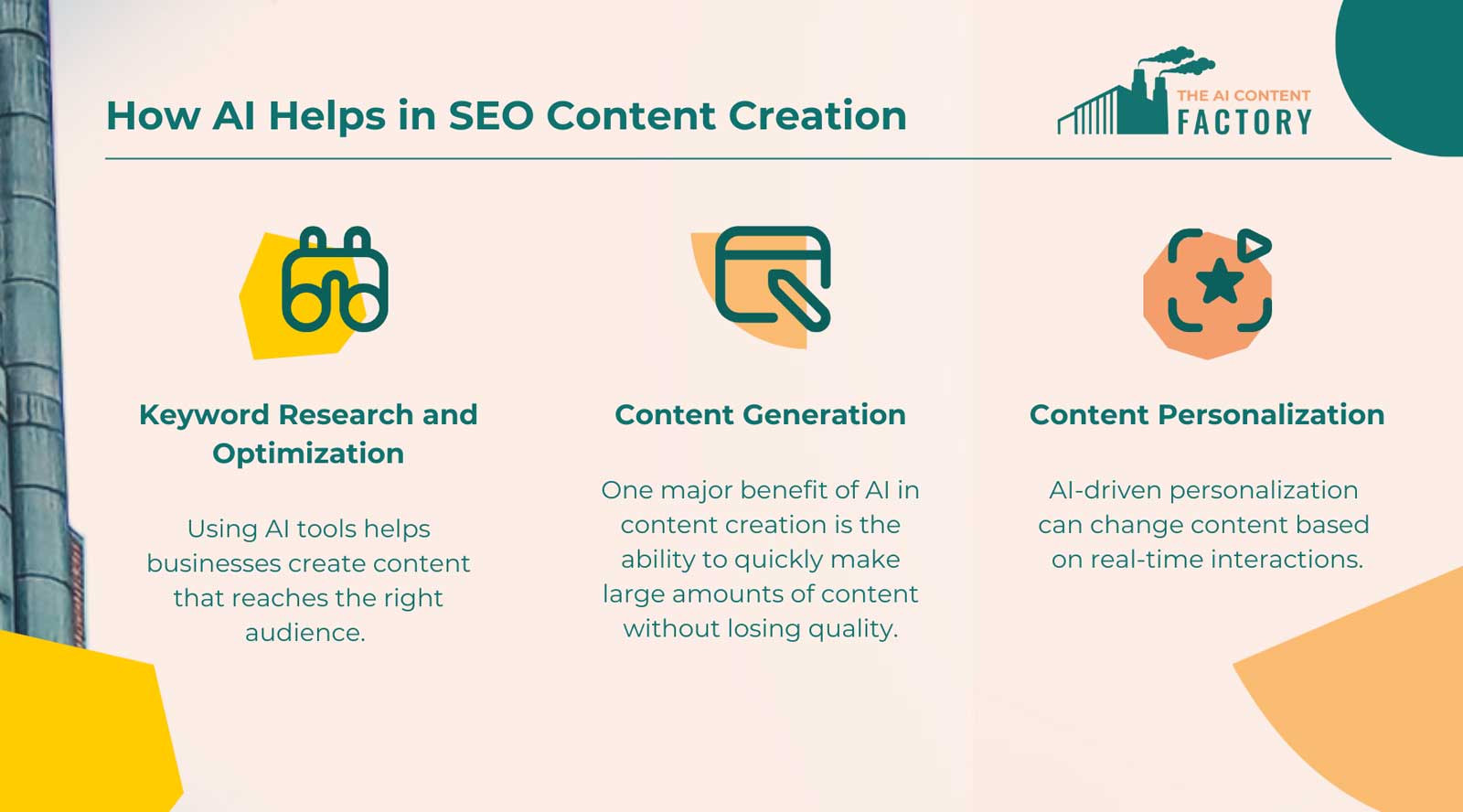
Using AI tools helps businesses create content that reaches the right audience. By matching content with the keywords that potential customers are searching for, businesses can improve their chances of showing up in search results. This targeted approach makes the content more visible and relevant, attracting more qualified visitors to the website.
AI tools for keyword research and optimization help businesses find the best keywords, making sure their content meets audience needs and ranks well in search results.
Here are some best practices:
- Leverage AI for Comprehensive Analysis: Use AI tools to do detailed keyword research, focusing on long-tail keywords that match what users are looking for.
- Regularly Update Keyword Lists: Search trends change over time. Regularly update your keyword list with the latest data to stay relevant.
- Analyze Competitor Keywords: AI tools can show you which keywords your competitors are using, helping you find gaps and opportunities.
Content Generation
AI SEO tools use advanced natural language processing (NLP) to create full articles based on topics and keywords.
NLP helps these tools understand the context of keywords and topics, making the content fit the needs of the audience. For example, if a business needs a blog post about AI in SEO, the tool can produce an article that includes all the important points and naturally uses the keywords.
One major benefit of AI in content creation is the ability to quickly make large amounts of content without losing quality. This is useful for businesses that need to keep their audience engaged and want to rank well in search results. These tools can also match different writing styles and tones, keeping the brand’s voice consistent.
On the other hand, this saves time and resources while making sure AI SEO content is optimized for search engines and the target audience.
Note: If you want to learn how to use AI for content marketing.
Our recommendation is for AI SEO content creation:
- Define Clear Guidelines: Offer AI tools clear instructions and context to ensure they create content that aligns with your brand voice and objectives.
- Use AI to Draft Content Quickly: Utilize AI to produce initial drafts, which can then be refined and personalized by human writers.
- Maintain Quality Control: Always review and edit AI-generated content to ensure accuracy, coherence, and adherence to SEO best practices.
Note: Learn how to humanize AI content here.
Content Personalization
AI can tailor content to fit different audiences, making sure the right message gets to the appropriate people.
This means creating content that matches the preferences, behaviors, and needs of different audience groups, which boosts user engagement and conversion rates.
By looking at this data, AI can find patterns and guess what kind of content will work best for each user. For instance, if someone often reads about dental health, AI will prioritize content related to dental care, new treatments, and relevant products. This kind of personalization makes the user experience more engaging and relevant.
Moreover, AI-driven personalization can change content based on real-time interactions. If someone shows interest in a specific topic, AI can immediately suggest related content, keeping the user engaged and on the site longer. This improves user satisfaction and increases the chances of conversions, as the content meets their immediate needs and interests.
It worth noting that personalized AI SEO content can be shared through various channels like email, social media, and websites. AI tools can split audiences into segments and tailor content to fit each segment’s preferences. For example, personalized emails can address recipients by name, suggest products based on their purchase history, and offer exclusive deals that match their interests.
Implement these best practices:
- Segment Your Audience: Use AI to analyze demographics, behavior, and preferences. That is, create detailed audience segments.
- Customize Content for Each Segment: Develop tailored content for different segments to ensure it meets their specific needs and interests.
- Dynamic Content Adjustment: Utilize AI to adjust content in real-time based on user interactions and feedback.
Content Structuring
AI can help make content easy to read and optimized for search engines. It simplifies structuring AI SEO content so that it’s friendly for both readers and search engines.
Proper content structuring means organizing it so it’s easy to understand and makes sense to search engines.
In fact, well-structured content is easier for both users and search engines to navigate.
AI can also suggest the use of internal and external links to enhance the content’s SEO value and provide additional resources to readers. Internal links connect related content within the same website, improving navigation and distributing link equity. External links to reputable sources add credibility and context to the content.
Consider these strategies:
- Use Clear Headings and Subheadings:AI can suggest an optimal hierarchy of headings (H1, H2, H3, etc.) to make content easier to scan.
- Incorporate Bullet Points and Lists: AI tools identify key points and format them into bullet points or numbered lists for better readability.
- Optimize Meta Tags: AI can generate optimized meta titles and descriptions that accurately reflect the content and include relevant keywords.
Performance Analysis
AI tools are great for checking how well your content is doing and giving tips to make it better. They track important numbers like page views, bounce rates, and conversion rates. This helps businesses see how well their content is engaging people and meeting goals.
Analyzing the performance of your content is crucial for ongoing improvement.
AI tools like can provide detailed insights into how your content is performing. These tools can find patterns that people might miss, making them very useful for improving AI SEO content.
Follow these best practices:
- Track Key Metrics: Monitor metrics such as page views, bounce rates, and conversion rates to gauge content effectiveness.
- Identify Trends and Patterns: Use AI to analyze data and identify trends that can inform future content strategies.
- Perform A/B Testing: Conduct A/B tests using AI tools to compare different versions of content and determine which performs better.
AI also looks at how people use the content, like how long they stay on a page, how far they scroll, and what they click on. This helps businesses understand what works and what doesn’t.
AI tools can also test different versions of content to see which one performs better. This helps businesses decide how to design, layout, and write their content.
Conclusion
As explained, using AI in SEO content creation has many benefits, including better keyword research, content generation, personalization, structuring, and performance analysis.
By following these tips, businesses can create high-quality, engaging SEO AI content that meets their audience’s needs and ranks well in search engines.
From The Content AI Factory, we recommend: Use AI SEO content to stay ahead in the competitive digital world.

0 Comments