

As content creation rapidly evolves with the rise of Artificial Intelligence (AI), whether the question Does Google Penalize AI Content? is increasingly crucial. Tools like ChatGPT, Bard, and others have revolutionized the production and consumption of content, making it possible to generate high-quality material at unprecedented speeds.
This technological leap is a significant opportunity for content creators, digital marketers, and businesses aiming to scale their content production. However, with great power comes great responsibility, and understanding Google’s stance on AI-generated content is essential for using these tools effectively.
The short answer is simple: Google does not penalize AI-generated content.
However, understanding how Google’s search algorithms interact with this new type of content is crucial for maintaining and improving your site’s visibility. This question is not just a technical curiosity; it’s a vital concern for anyone relying on search engine optimization (SEO) to drive traffic and engagement.
This article will explore how to ensure your AI-generated content meets Google’s quality guidelines, avoiding potential pitfalls and maximizing the benefits of this powerful technology. We’ll delve into best practices for creating AI content, real-life scenarios to explore what might work, and strategies for staying ahead of Google’s ever-evolving algorithms.
Google’s Stance on AI Content: What You Need to Know
Google’s official stance is that the source of content—whether human or AI—does not inherently affect its ranking. Instead, the focus is on the quality, relevance, and usefulness of the content to users.
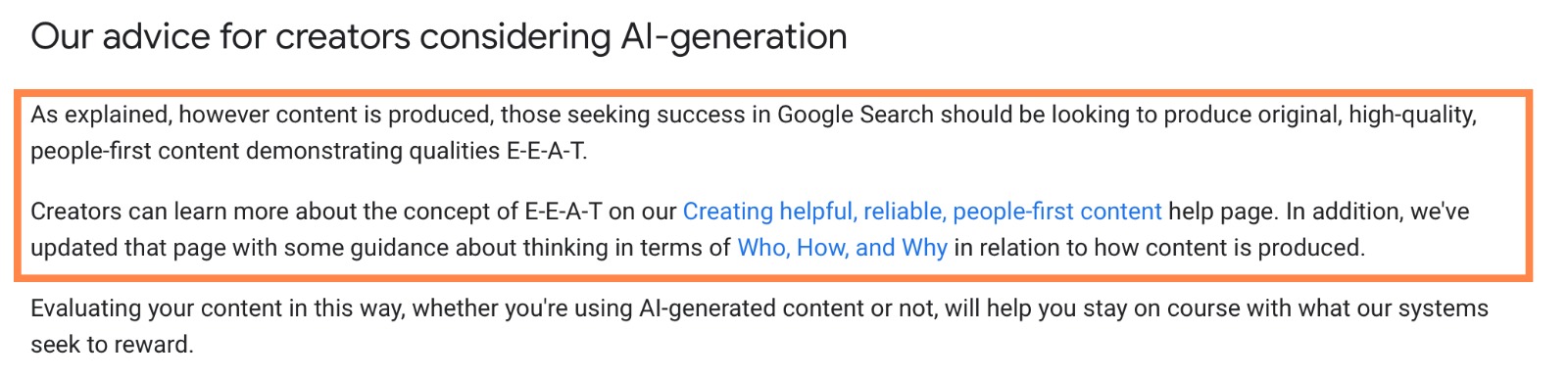
As stated on Google Search Central, the key concern is not the use of AI itself, but the quality of the content it produces:

The primary aim of Google’s algorithms is to reward content that demonstrates Expertise, Experience, Authoritativeness, and Trustworthiness (E-E-A-T). This principle is at the heart of Google’s Helpful Content Update, which emphasizes content that genuinely helps users and provides value. Therefore, AI-generated content that meets these standards can rank well, while poor-quality content—regardless of its source—can be penalized.
Google’s Evolving Algorithms and AI Detection
Understanding how Google’s algorithms evolve and detect AI-generated content is crucial for ensuring your content remains compliant and high-ranking. Google is continuously updating its algorithms to better serve users with the most relevant, high-quality content.
Here’s what you need to know about Google’s approach to AI detection and how to stay ahead of the curve.
The Role of Evolving Algorithms
Google’s search algorithms are designed to prioritize content that provides genuine value to users. These algorithms consider numerous factors, including content quality, relevance, and user engagement metrics.
As AI-generated content becomes more prevalent, Google has adapted its algorithms to identify and evaluate such content more effectively. The key updates to be aware of include:
- The Helpful Content Update: Introduced in August 2022, this update aims to reward content that is genuinely helpful to users and penalize content primarily created to attract search engine traffic without adding real value. This update underscores the importance of creating user-focused content that meets Google’s E-E-A-T (Expertise, Experience, Authoritativeness, and Trustworthiness) criteria.
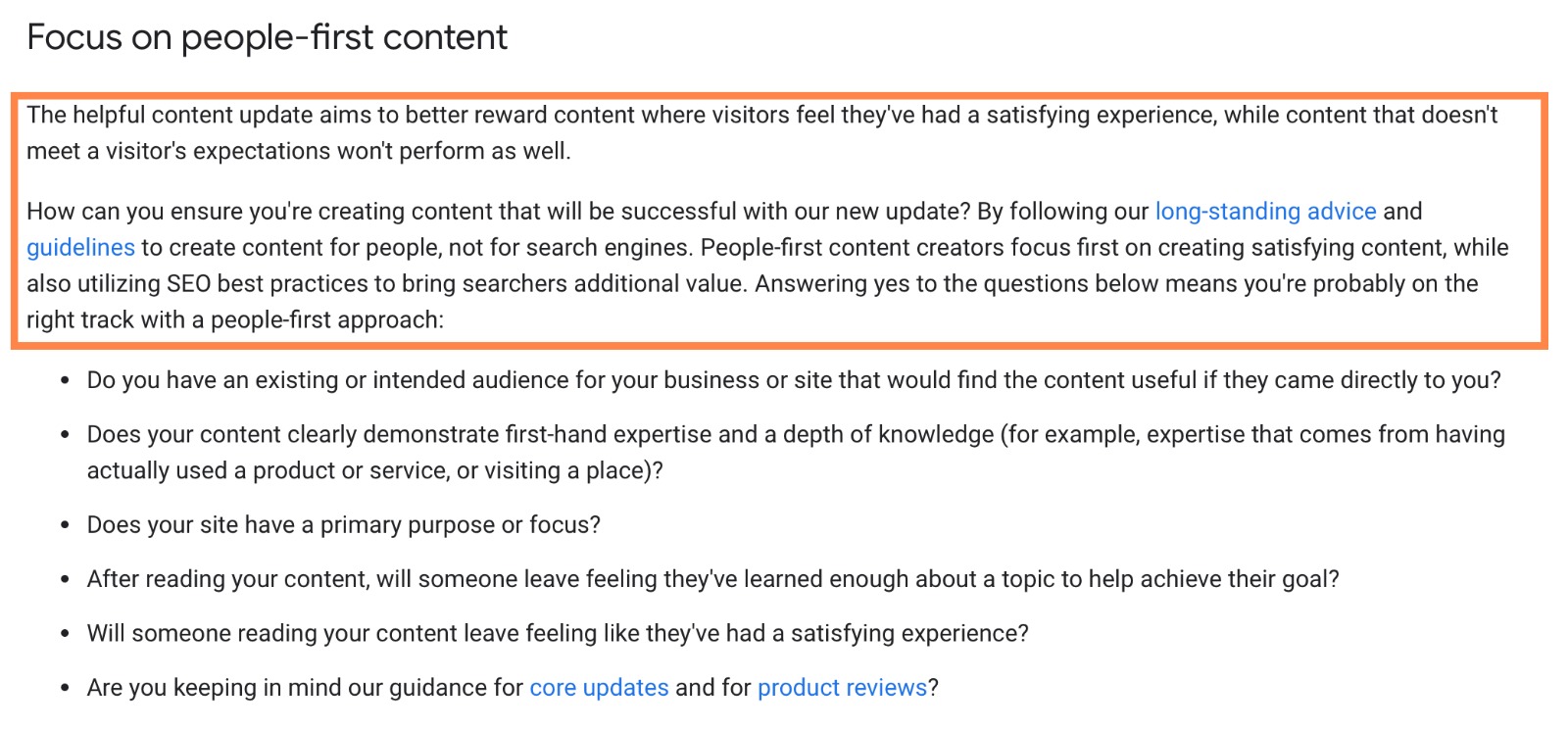
- Core Algorithm Updates: Google periodically releases core updates that refine how its algorithms assess and rank content. These updates often include improvements in understanding context, user intent, and content quality, which can impact how AI-generated content is evaluated.
AI Detection Capabilities
While Google’s current stance is that AI-generated content is not inherently penalized, it emphasizes the need for high-quality content. Google uses advanced natural language processing (NLP) techniques to detect content patterns indicative of low-quality or auto-generated material. Here are some aspects of AI detection:
- Pattern Recognition: Google’s algorithms can identify repetitive patterns, unnatural phrasing, and other markers typical of purely AI-generated content. Content that lacks depth, coherence, and originality may be flagged.
- User Engagement Signals: Metrics such as bounce rates, time on page, and user interaction can indicate the quality of content. Poorly performing AI-generated content may lead to algorithmic penalties.
- Manual Reviews: In some cases, human reviewers may assess flagged content to determine its quality and compliance with Google’s guidelines. This adds another layer of scrutiny to ensure that content meets the necessary standards.
Staying Compliant with Google’s Guidelines
To ensure your AI-generated content aligns with Google’s evolving algorithms, consider the following best practices:
- Focus on Quality and User Value: Always prioritize creating content that is informative, engaging, and genuinely helpful to your audience. This means incorporating original insights, comprehensive coverage, and accurate information.
- Human Oversight: Human editors play a crucial role in refining AI-generated content. Ensure that all AI content is reviewed and polished by human editors to meet quality standards.
- Regular Updates and Audits: Keep your content up-to-date and conduct regular audits to ensure it continues to meet Google’s guidelines. This includes updating factual information, improving readability, and enhancing user engagement elements.
- Adapting to Algorithm Changes: Stay informed about Google’s algorithm updates and adjust your content strategy accordingly. Subscribe to industry blogs, attend webinars, and engage with SEO communities to stay ahead of changes.
By understanding Google’s evolving algorithms and implementing these best practices, you can effectively leverage AI-generated content while maintaining compliance and achieving high search rankings.
The key is to blend AI efficiency with human expertise, ensuring your content remains valuable and relevant in an ever-changing digital landscape.
Case Studies and Real-Life Examples: AI Content and Google’s Possible Responses
Exploring various scenarios of AI-generated content and Google’s potential responses highlights the critical role of quality and human oversight in content creation. Understanding how Google might evaluate different types of AI-generated content can provide valuable insights into the best practices for ensuring your content meets their standards.
Here are detailed examples of each scenario to illustrate the impact of quality and human involvement:
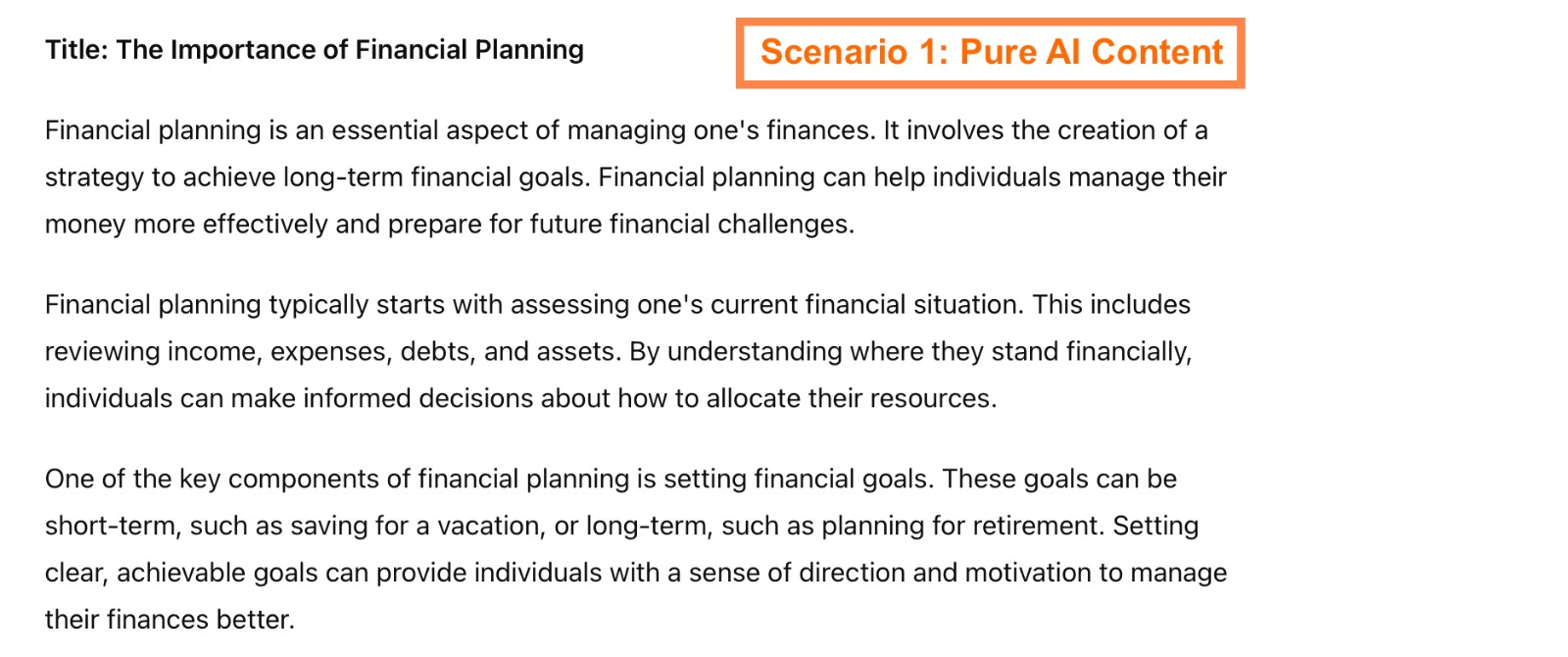
Scenario 1: Pure AI Content
Example: Generic AI-Generated Blog Posts. A company decides to automate its content creation process entirely using an AI tool like GPT-3. They generate blog posts on various topics without any human editing or oversight. The content is published directly on their website. As you can see in the example, these posts might lack depth, exhibit coherence issues, and fail to provide unique insights or value to readers.
Google’s Possible Response: Due to the potential lack of quality, originality, and engagement, Google’s algorithms might detect these deficiencies, resulting in lower rankings. Users may find the content unhelpful and disengaging, leading to higher bounce rates and poor user metrics, which could further signal to Google that the content is subpar.
Potential Real-Life Outcome: A small e-commerce site might experience a significant drop in organic traffic within a few months if they generate product descriptions and blog posts entirely with AI without human oversight. The content might not rank well for target keywords, and existing rankings could plummet due to poor user engagement metrics.
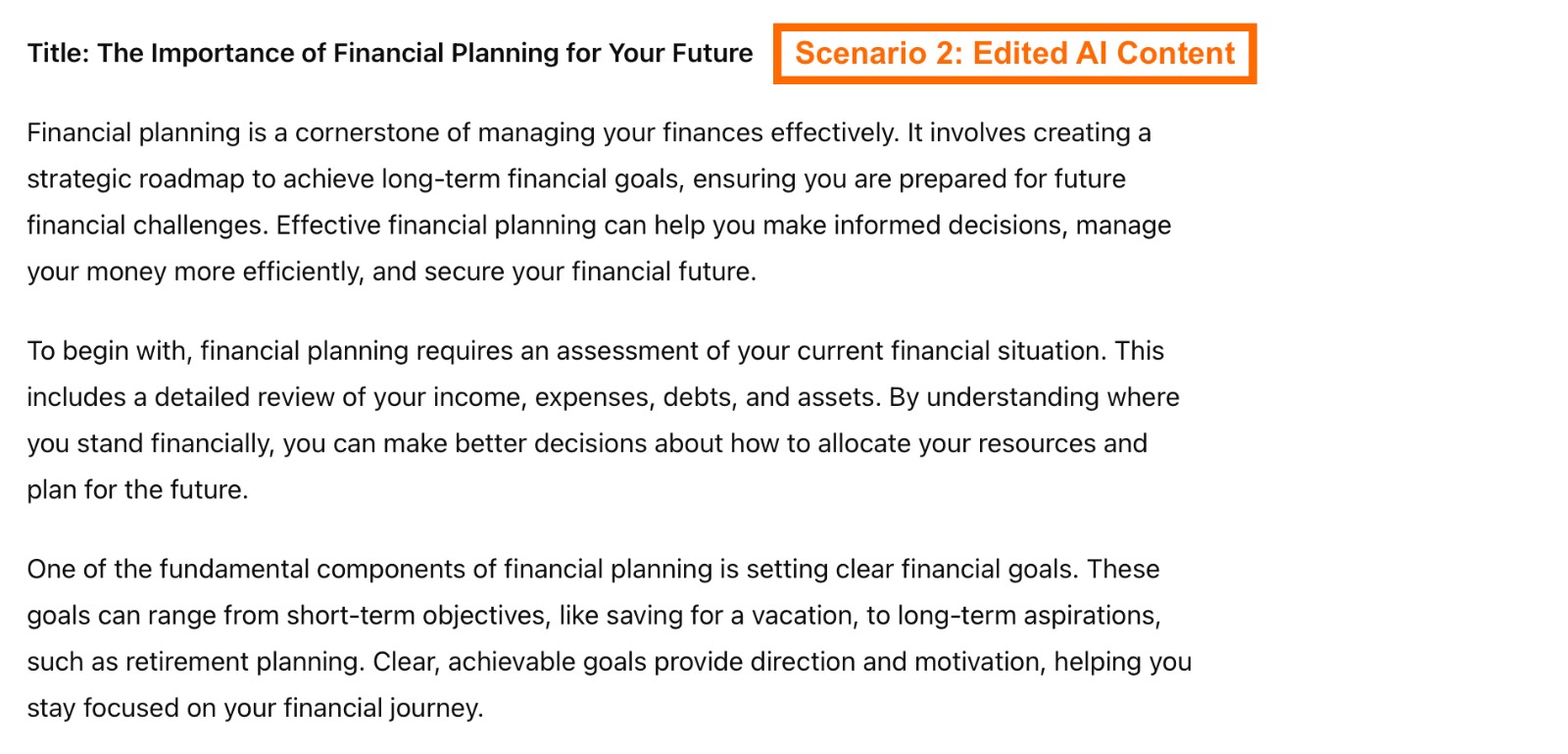
Scenario 2: Edited AI Content
Example: Tech Publication’s Hybrid Approach. A tech publication uses AI tools to generate first drafts of articles. These drafts are then reviewed, edited, and polished by experienced human editors. The editors enhance the content’s clarity, add unique insights, fact-check information, and ensure it aligns with the publication’s voice and standards.
Google’s Possible Response: The edited content could be of high quality, meeting user intent and providing valuable information. Google’s algorithms might recognize the content’s depth, accuracy, and relevance, leading to better rankings in search results. Users could find the content engaging and helpful, resulting in positive user metrics.
Potential Real-Life Outcome: In The AI Content Factory we effectively use this hybrid approach. Our AI-generated content is meticulously edited by human experts, ensuring it meets high standards of accuracy and user value. Consequently, our articles rank well for competitive keywords, driving significant organic traffic to our site.
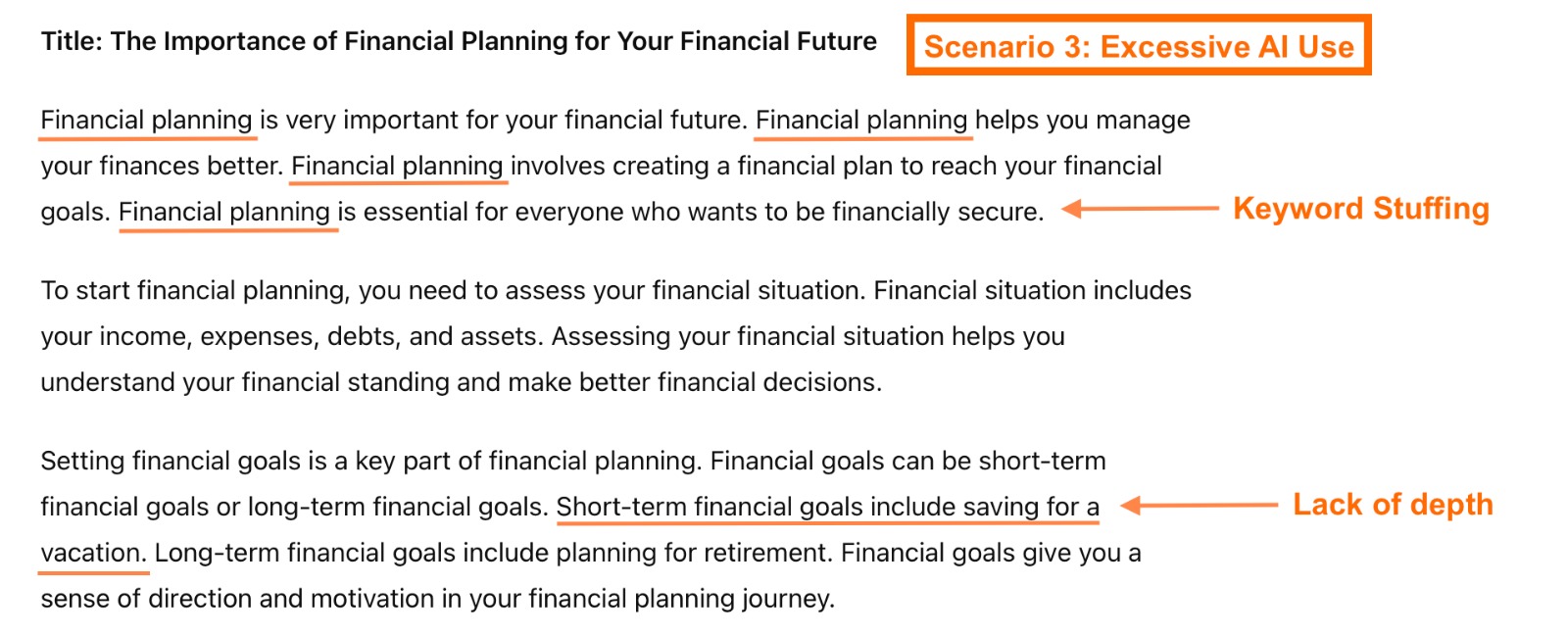
Scenario 3: Excessive AI Use without Quality Control
Example: Content Farm with Minimal Oversight. A content farm produces large volumes of articles using AI tools, with minimal human oversight. The focus is on quantity over quality, and the content is not thoroughly reviewed or fact-checked. Many articles could be published with errors, lack depth, and be stuffed with keywords.
Google’s Possible Response: Google’s algorithms might detect the low quality and keyword stuffing, resulting in penalties. The site could experience a significant drop in search rankings, visibility, and organic traffic. The content might be deemed untrustworthy and unhelpful, leading to poor user engagement metrics.
Potential Real-Life Outcome: A marketing agency might try scaling their content production using AI with minimal human editing. Initially, they could see a spike in content output, but soon after, they might face penalties from Google. Their site’s ranking could drop dramatically, and they might lose a substantial amount of organic traffic, forcing them to rethink their content strategy and reinvest in human oversight.
Best Practices for AI Content to Avoid Penalties
Now that we have explored the potential scenarios involving AI content creation, it’s time to delve into the best practices to follow. Are you looking for specific actions to ensure your AI-generated content aligns with Google’s expectations? Here are our top recommendations to help you meet quality standards and avoid penalties:
Human Oversight and Editing
Human oversight is crucial in refining AI-generated content. While AI tools can produce drafts quickly, human editors play an essential role in enhancing clarity, coherence, and ensuring the content aligns with your brand’s voice and standards. This combination of AI efficiency and human touch can significantly improve the quality and effectiveness of your content.
Human editors are vital in transforming AI-generated drafts into polished, engaging, and accurate pieces. They refine the structure, improve readability, and ensure that the content resonates with the target audience. This process includes correcting grammatical errors, enhancing flow, and incorporating unique insights that an AI might miss.
The C.R.A.F.T Framework
The C.R.A.F.T framework, originally created by AI expert Julia McCoy, is a structured approach to editing AI content that ensures that content resonates with the target audience and effectively conveys with the brand’s messaging and values:
- C: Cut the Fluff: Remove unnecessary information to keep the content concise and relevant.
- R: Review and Edit: Thoroughly review the content, optimizing it for clarity and coherence.
- A: Add Visuals: Incorporate images, videos, and other media to enhance the content.
- F: Fact-Check: Ensure all information is accurate and verified.
- T: Trust-Building Elements: Include personal stories, credible links, and authoritative sources to build trust with readers.

Ensure Originality and Accuracy
Originality is key to avoiding Google penalties. Use tools like Copyscape and Grammarly to check for plagiarism and grammatical errors, and help ensure your content is unique and polished before publication.
Moreover, your content should thoroughly address the user’s query and be supported by credible sources. Google values comprehensive coverage and factual accuracy, which can be achieved by incorporating diverse and reliable sources of information.
Interactive and Multimedia Enhancements
Adding interactive elements such as quizzes, calculators, and multimedia can significantly enhance user engagement. These elements make the content more dynamic and can improve user experience, which is a positive signal to Google’s algorithms.
Also incorporate visuals, videos, and other multimedia to break up text and provide a richer user experience. This not only makes your content more appealing but also helps to convey information more effectively.
Focus on User Intent Instead of Questioning if Does Google Penalize AI Content
Understanding and addressing user intent is critical. Your content should directly respond to what users are searching for, providing clear and comprehensive answers to their questions. This approach helps meet Google’s emphasis on user-centric content.
Conclusions
As we’ve explored, the question “Does Google penalize AI content?” is a complex one. While Google does not inherently penalize content solely based on its AI origins, the focus remains steadfast on the quality, relevance, and value provided to users.
The evolution of Google’s algorithms reflects its ongoing commitment to prioritizing user experience and high-quality content, regardless of its source.
To successfully navigate this landscape, it’s crucial to integrate human oversight into your AI content strategy. By doing so, you ensure that your content not only meets but exceeds Google’s quality standards, thereby avoiding potential penalties.
Employing best practices such as thorough editing, maintaining originality and accuracy, and staying updated with Google’s evolving guidelines will help you create content that performs well in search rankings and resonates with your audience
For those looking to seamlessly integrate AI into their content creation process while maintaining a human touch, explore the products offered by The AI Content Factory. Our solutions combine cutting-edge AI technology with expert human oversight, ensuring your content is top-notch and fully aligned with Google’s quality standards.
Visit The AI Content Factory to learn more and take your content strategy to the next level!

0 Comments