

In the digital age, AI-generated content has revolutionized the way we produce and consume information. From blogs to social media posts, AI tools are increasingly being utilized to create content quickly and efficiently. However, this rise in AI content creation has led to a crucial question: can Google detect AI content?
The ability of Google’s algorithms to identify AI-generated text has been a topic of much debate and speculation. For content creators and SEO experts, understanding how Google perceives AI content is essential for ensuring compliance with its guidelines and avoiding potential penalties. In this article, we will delve into the myths and realities surrounding Google’s detection of AI content, exploring the techniques used, the challenges faced, and the best practices for leveraging AI while adhering to Google’s quality standards.
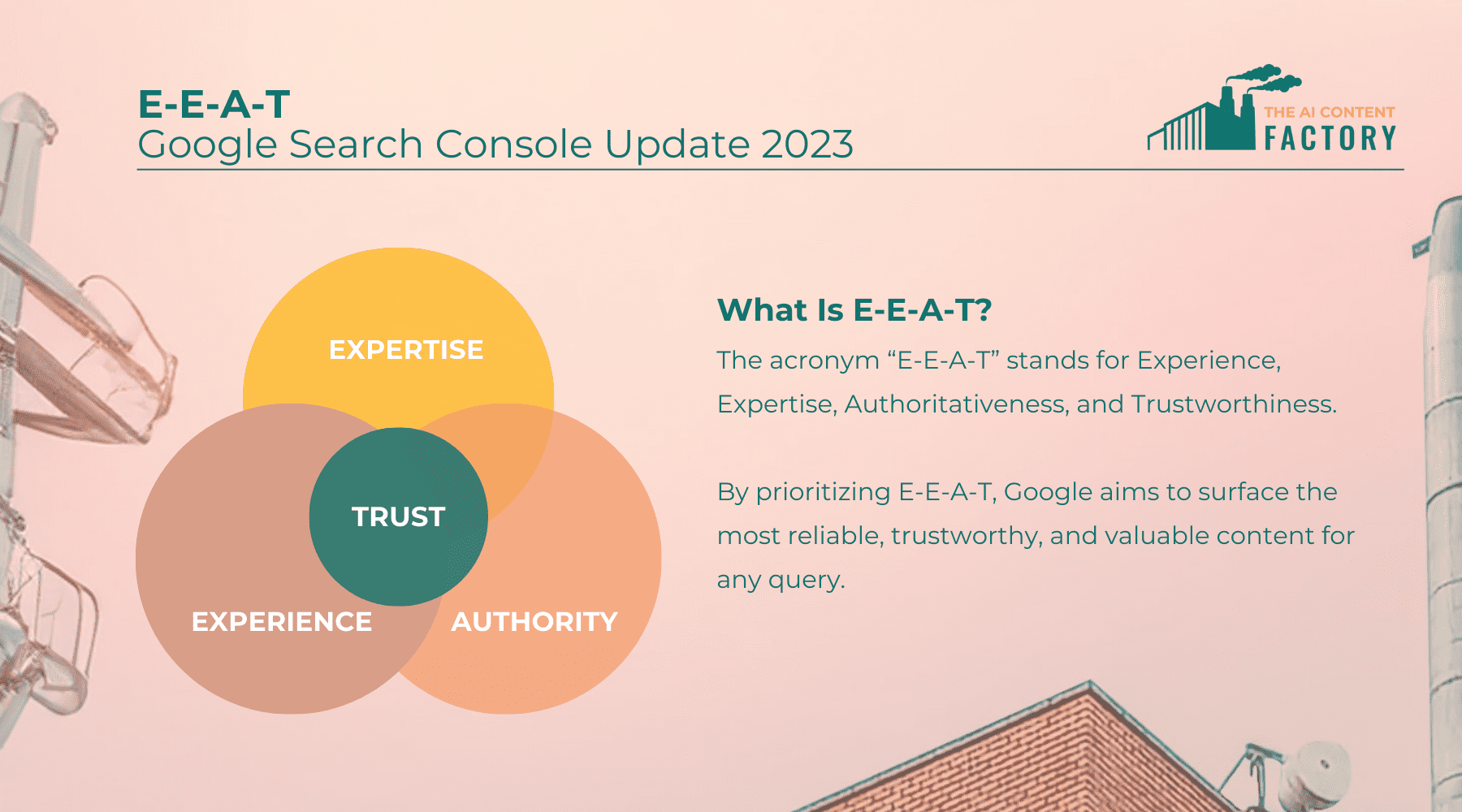
As AI technology continues to evolve, so too does Google’s approach to content detection and evaluation. With the introduction of the E-E-A-T (Experience, Expertise, Authoritativeness, Trustworthiness) guidelines, Google has shifted its focus from merely detecting AI-generated content to assessing the overall quality and value it provides to users. This shift underscores the importance of creating high-quality, user-focused content, whether generated by humans, AI, or a combination of both.
Let’s explore how Google’s stance on AI content has evolved, the techniques it employs to detect AI-generated text, and how you can ensure your AI content meets Google’s stringent quality requirements.
Understanding Google’s Stance on AI Content
Although Google is not the only search engine in the world, we often resort to the question we started this article with. We would like to point out that other search engines such as Yandex or Bing are also moving to adapt to the new era of AI content generation.
Google’s Historical Perspective
Historically, Google’s guidelines have been clear on their stance against automatically generated content. According to John Mueller, Google’s Search Advocate, AI-generated content has been considered a form of spam under the Webmaster Guidelines for many years. This was because earlier forms of AI-generated content typically lacked the quality and relevance needed to provide value to users.
Changes in 2023
In a significant shift, Google updated its guidelines in 2023 to focus more on the quality of content rather than its origin. This change was influenced by the introduction of advanced AI tools and the increasing use of AI in content creation. Google’s current approach emphasizes rewarding high-quality content, regardless of whether it is created by humans or AI. This means that AI-generated content is no longer automatically penalized, provided it meets certain quality standards.
Current Policies
The core of Google’s current policy is encapsulated in the E-E-A-T (Experience, Expertise, Authoritativeness, Trustworthiness) guidelines. These guidelines are designed to ensure that content is valuable and reliable, focusing on the end user’s experience. According to these standards, any content—whether human or AI-generated—must showcase expertise, provide authoritative information, and be trustworthy. Google’s shift towards these guidelines underscores the importance of content quality over the method of its creation.
Would help to get some kind of on-the-record statement from Google about this, relative to their previous guidance on AI-generated content.
Is this considered non-violative based on it being “backstopped” by a human? Other reasons? Genuinely curious.
cc: @JohnMu @searchliaison https://t.co/Ft4XRMVQcf
— Blair MacGregor (@blairmacgregor) January 11, 2023
So, while Google’s historical stance was stringent against AI-generated content, the recent changes reflect a more nuanced approach that prioritizes content quality. As long as the content adheres to Google’s E-E-A-T guidelines and provides genuine value to users, it stands a good chance of performing well in search rankings, irrespective of its AI origins.
Can Google Detect AI Content?
The quick answer is “yes”, but with a big “depends” on it. Let’s dig inside.
Techniques Google Uses
Google employs various techniques to detect AI-generated content. One of the primary methods is the use of natural language processing (NLP) algorithms. These algorithms analyze text for patterns and syntax commonly found in machine-generated writing. For example, repetitive sentence structures, excessive use of certain phrases, and lack of coherence are indicators that the content might be AI-generated.
Additionally, Google looks for specific markers that are often present in AI-generated text, such as overuse of certain keywords or phrases like “according to research” or “data suggests”. These markers help Google’s algorithms identify content that may have been produced by an AI tool rather than a human writer.
Another technique involves cross-referencing content against a vast database of known AI-generated text. This helps Google identify similarities and patterns that are typical of AI-generated content. Moreover, Google’s algorithms are designed to detect content that lacks originality or appears to be a regurgitation of existing information without adding new value or insights.
Challenges in Detection
Despite these advanced techniques, detecting AI-generated content is not without challenges. One major limitation is that AI tools are becoming increasingly sophisticated, making their output harder to distinguish from human-written text. AI models like GPT-4 are capable of producing highly coherent and contextually relevant content that can often pass as human-written.
We’re opening up access to our new flagship model, GPT-4o, and features like browse, data analysis, and memory to everyone for free (with limits). https://t.co/H2dB6w7Ynz
— OpenAI (@OpenAI) May 13, 2024
Furthermore, Google’s detection mechanisms are not foolproof and may require human intervention to accurately identify AI-generated content. This is particularly true for high-quality AI content that adheres to E-E-A-T guidelines and does not exhibit obvious signs of automation.
Another challenge is the constant evolution of AI technology. As AI tools continue to improve, Google’s algorithms must also evolve to keep pace. This ongoing development creates a dynamic environment where detection techniques must be continuously updated and refined to remain effective.
With humanized IA content and start positioning your brand in search engines.
Myths About Google Detecting AI Content
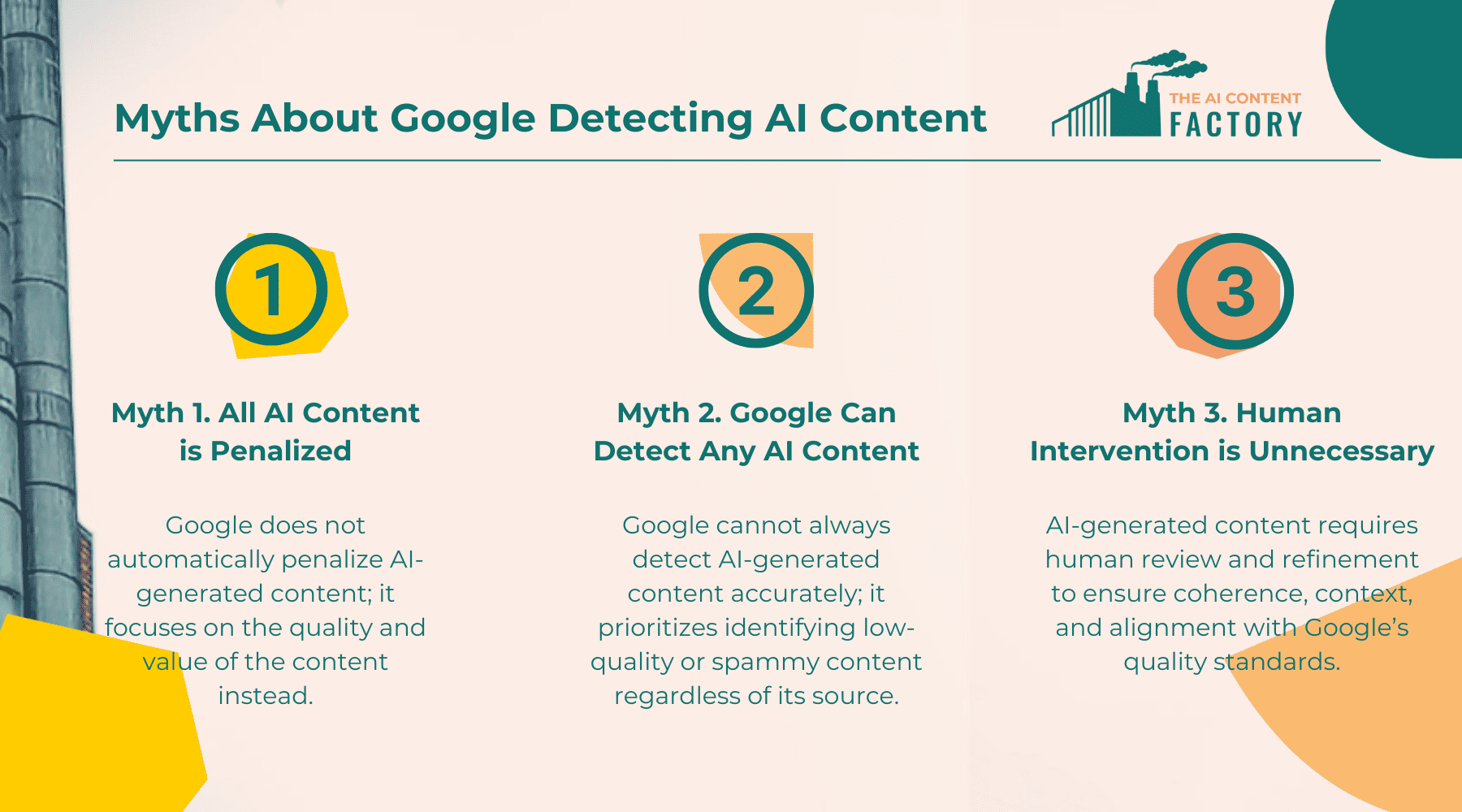
Myth 1: All AI Content is Penalized
One common misconception is that Google automatically penalizes all AI-generated content. This myth stems from Google’s earlier guidelines that categorized AI-generated content as spam.
However, recent updates indicate that Google does not penalize content solely based on its AI origin. Instead, the focus is on the quality and value of the content. As long as AI-generated content adheres to Google’s E-E-A-T guidelines and provides useful, accurate information to users, it is unlikely to be penalized.
Myth 2: Google Can Detect Any AI Content
Another prevalent myth is that Google can infallibly detect AI-generated content. While Google has sophisticated tools and algorithms for content analysis, detecting AI content is not always straightforward.
Advanced AI models, like GPT-4, produce highly human-like text that can be challenging to identify as machine-generated. Furthermore, Google’s primary concern is not the detection of AI content per se, but rather the identification of low-quality or spammy content, regardless of its source.
Myth 3: Human Intervention is Unnecessary
A third myth is that AI-generated content can be published as-is without any human review or intervention.
This is a dangerous assumption. AI tools, while powerful, are not infallible and can produce content that lacks coherence, context, or relevance.
Google emphasizes the importance of human oversight to ensure that content meets quality standards and provides real value to users. Editing and refining AI content are crucial steps to ensure it aligns with Google’s guidelines and performs well in search rankings.
In summary, while myths about Google’s detection of AI content persist, the reality is more nuanced. Google’s primary focus is on the quality and usefulness of content, rather than its origin. By understanding these nuances, content creators can better leverage AI tools while adhering to best practices for SEO and content quality.
Realities of Using AI Content
Now that we have looked at the importance of Google’s guidelines, let’s get down to the reality of AI content generation.
Quality Over Method
One of the fundamental realities of using AI-generated content is that quality trumps the method of creation.
Google’s current guidelines emphasize that content must be valuable, accurate, and user-centric to rank well.
This applies to both human and AI-generated content. Google’s E-E-A-T guidelines focus on ensuring content demonstrates experience, expertise, authoritativeness, and trustworthiness. Therefore, whether content is produced by AI or humans, it must meet these standards to perform well in search rankings.
Risks of Unedited AI Content
Publishing AI-generated content without human oversight can lead to several risks. AI tools, despite their advancements, often produce content that lacks the depth, coherence, and nuance of human writing.
Unedited AI content can exhibit repetitive sentence structures, lack of context, and even inaccuracies, which can be detrimental to user experience and SEO performance. Google’s algorithms are adept at identifying such patterns, which can lead to penalties or lower rankings if the content is deemed low-quality or spammy.
Moreover, AI-generated content might not always align perfectly with the latest trends or specific nuances of a topic, which human writers can more effectively address through their expertise and contextual understanding.
The Importance of Human Oversight
Combining AI tools with human oversight is essential to produce high-quality content, as we do in The AI Content Factory. Human editors can refine AI-generated drafts, ensuring they meet E-E-A-T guidelines and resonate with the target audience. This process involves fact-checking, enhancing readability, and adding unique insights that AI might miss. By blending AI efficiency with human creativity and judgment, content creators can leverage the best of both worlds .
In conclusion, while AI tools are valuable for content creation, they must be used strategically and complemented by human expertise. The focus should always be on creating high-quality, valuable content that meets Google’s guidelines and provides a great user experience.
Best Practices for Using AI Content
Before learning the best practices for using AI content, read our IA content case studies.
Adhering to E-E-A-T Guidelines
Google’s E-E-A-T guidelines—Experience, Expertise, Authoritativeness, and Trustworthiness—are crucial for ensuring content quality. To make sure AI-generated content aligns with these guidelines, follow these best practices:
•Experience: Ensure the content reflects real-world experience or firsthand knowledge. If AI is used to draft the content, enrich it with insights and examples from human experience.
•Expertise: Involve subject-matter experts in the content creation process. AI can assist in generating drafts, but experts should review and add nuanced information to ensure accuracy and depth.
•Authoritativeness: Establish the content’s authority by citing credible sources and providing evidence to support claims. AI tools can help identify relevant sources, but human editors should verify and integrate them appropriately.
•Trustworthiness: Maintain transparency about the content creation process. If AI tools are used, disclose this fact and emphasize the human oversight involved to build trust with your audience.
With humanized IA content and start positioning your brand in search engines.
Combining AI and Human Efforts
To maximize the benefits of AI content while adhering to Google’s standards, it’s essential to blend AI capabilities with human oversight. Here are some effective strategies:
•Initial Drafting: Use AI tools to generate the initial draft, saving time and providing a solid foundation for further refinement.
•Editing and Refining: Human editors should review AI-generated content to enhance readability, coherence, and relevance. This step is crucial for aligning the content with E-E-A-T guidelines and ensuring it resonates with the target audience.
•Fact-Checking: Verify the information provided by AI tools to ensure accuracy. This step helps avoid the dissemination of false or misleading information, which can harm your credibility and SEO performance.
Tools to Optimize AI Content
Various tools can help optimize AI-generated content, making it less detectable as machine-generated and enhancing its quality:
•Undetectable.ai: This tool can transform AI-generated text to make it appear more human-like by adjusting syntax, sentence structure, and language patterns. It also offers an AI detector to test the content’s detectability.
•Grammarly and Hemingway Editor: These tools can improve readability and grammatical accuracy, making the content more polished and professional.
•SEO Optimization Tools: Tools like Yoast SEO and SEMrush can help ensure the content is optimized for search engines, enhancing its visibility and performance.
By strategically using AI tools and integrating human expertise, you can create high-quality content that meets Google’s standards and provides value to your audience. This approach helps in avoiding penalties and enhances the overall effectiveness of your content strategy.
Future of AI Content Detection
Things will not stay like this, that much is clear. Plagiarism detection tools will continue to improve, as will content generation tools. What lies ahead?
Evolving Technologies
AI technology is continuously evolving, and so are the methods used to detect AI-generated content. Google’s algorithms are becoming more sophisticated, leveraging advanced machine learning techniques to better identify patterns and anomalies indicative of AI-generated text. This ongoing evolution means that content creators must stay updated with the latest developments and adjust their strategies accordingly.
Preparing for Changes
As AI and detection technologies advance, it’s crucial for content creators to remain proactive. Here are some strategies to stay ahead:
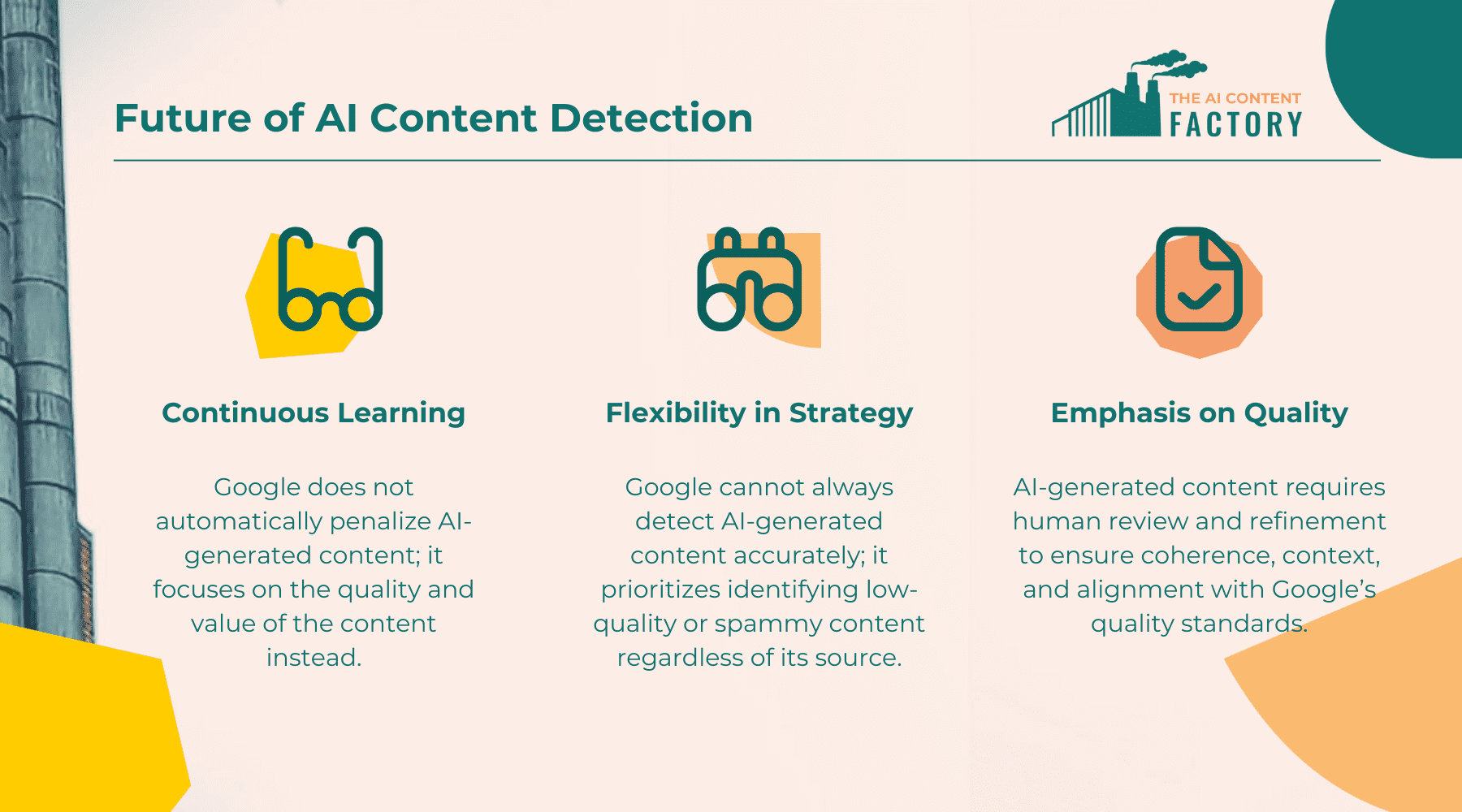
•Continuous Learning: Keep up with industry trends and updates in AI technology and SEO practices. Regularly attend webinars, read industry blogs, and participate in relevant forums to stay informed.
•Flexibility in Strategy: Be prepared to adapt your content creation and optimization strategies as new tools and guidelines emerge. Flexibility is key to maintaining compliance with Google’s evolving standards.
•Emphasis on Quality: Regardless of changes in technology or guidelines, the focus should always remain on creating high-quality, valuable content. Prioritize user experience and ensure that every piece of content meets the highest standards of accuracy, relevance, and engagement.
In summary, Google’s ability to detect AI-generated content is a nuanced topic, influenced by the quality of the content and adherence to Google’s guidelines. Here are the key points covered in this article:
1. Google’s Evolving Stance: Historically, Google considered AI-generated content as spam, but recent updates have shifted the focus to content quality rather than its origin. The introduction of the E-E-A-T (Experience, Expertise, Authoritativeness, Trustworthiness) guidelines underscores this shift.
2. Detection Techniques: Google uses advanced natural language processing (NLP) algorithms and other techniques to detect AI-generated content. These methods analyze text for repetitive patterns, specific markers, and lack of originality.
3. Common Myths: Misconceptions about Google automatically penalizing all AI content or being able to detect any AI content infallibly were addressed. Google’s focus is on the quality and value of the content, not merely its origin.
4. Importance of Human Oversight: While AI tools are valuable for content creation, human intervention is essential to ensure quality. Editing, fact-checking, and refining AI-generated drafts are crucial steps to align content with Google’s guidelines and enhance user experience.
5. Best Practices: Adhering to E-E-A-T guidelines, combining AI and human efforts, and using optimization tools are effective strategies to produce high-quality AI content. Tools like Undetectable.ai and Grammarly can help improve readability and make AI content less detectable.
6. Future Considerations: As AI and detection technologies evolve, content creators must stay informed and flexible, continuously learning and adapting their strategies to maintain compliance with Google’s evolving standards.
If you want to create content at scale or simply don’t know how to start a content strategy, contact us now! We know how to create AI-generated content that is reviewed and improved by humans and ranks on Google.

0 Comments