

Most small businesses believe that growth requires a large marketing budget. The prevailing logic suggests a direct correlation between ad spend and revenue, a narrative that often leaves smaller players feeling outmatched. However, data reveals a different story. While 83% of marketers cite content marketing as their most effective strategy for demand generation, only 57% of small businesses are actively using it.
This gap doesn’t represent a failure, but a significant, untapped opportunity.
This isn’t just about creating a blog or posting on social media. It’s about building a strategic asset that generates compounding returns, establishes authority, and costs 62% less than traditional marketing while generating three times more leads.
This guide provides a clear, actionable framework for small businesses to build a powerful content marketing engine that drives sustainable growth, moving beyond the endless cycle of paid advertising.
What Is Content Marketing (And What It Isn’t)
Content marketing is the strategic practice of creating and distributing valuable, relevant, and consistent content to attract and retain a clearly defined audience — and, ultimately, to drive profitable customer action. For a small business, this means shifting from a purely promotional mindset (“Buy our product!”) to an educational one (“Here’s how you can solve your problem.”).
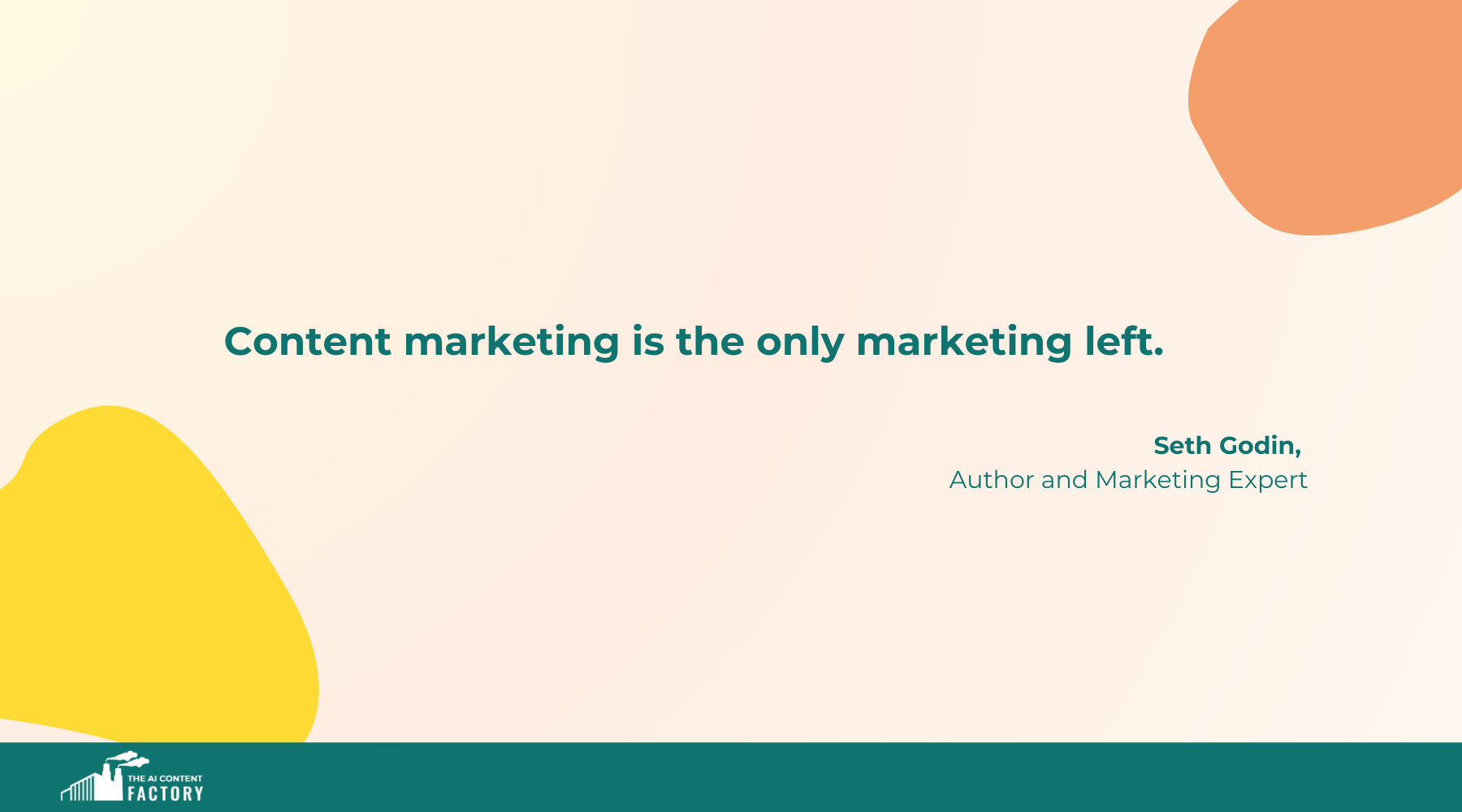
It’s fundamentally different from traditional advertising. Advertising interrupts, content attracts. An ad pushes a message onto a passive audience, often with a short-term goal. Content marketing pulls an active audience in by offering solutions and building trust over time. Think of it as the difference between a cold call and a trusted recommendation.
This approach is not about giving away free information with no return.
It’s a calculated investment in building a relationship with potential customers. By consistently providing value, you establish your business as the go-to expert in your field. When the time comes for them to make a purchase, you are not just another option; you are the only logical choice.
The key distinction is in the intent. Traditional advertising is transactional. Content marketing is relational. A plumber who runs a paid ad is competing on price and timing. A plumber who publishes a guide on “How to prevent your pipes from freezing this winter” is building trust with homeowners before they even have a problem. When the emergency happens, they know exactly who to call.
Why Content Marketing for Small Businesses Is a Non-Negotiable Asset
For a small business, every investment must be scrutinized for its potential return. Content marketing isn’t a ‘nice-to-have’; it’s a core business strategy that directly impacts the bottom line. The data is unequivocal: businesses that consistently publish content see a 13x higher ROI than those that don’t.
This isn’t just about visibility; it’s about building a sustainable growth engine.
The Compounding Power of Content
Unlike paid advertising, which stops the moment you stop paying, content marketing builds on itself. An article you publish today can continue to generate leads for years, with its value increasing as it gains more authority and backlinks.
This creates a powerful, long-term asset that drives predictable organic growth.
The primary benefits extend far beyond simple lead generation. Trust is perhaps the most undervalued currency in modern business. Consumers are increasingly skeptical of advertising, but they actively seek out expert advice. When a small business consistently publishes content that solves real problems, it builds a level of credibility that no ad campaign can buy.
This trust translates directly into higher conversion rates, lower customer acquisition costs, and stronger customer retention.
Beyond trust, there is the compounding nature of organic search. A well-optimized article can rank on the first page of Google for years, generating a continuous stream of qualified traffic without any ongoing cost.
This is in stark contrast to paid advertising, where the traffic stops the moment the budget runs out. For a small business managing tight cash flow, this distinction is not just strategic — it’s existential.

The Real Cost: Content Marketing vs. Paid Advertising
Small businesses often default to paid advertising for its promise of immediate results. However, this immediacy comes at a high and continuous cost. Content marketing, while requiring an upfront investment of time and resources, builds a lasting asset with a significantly lower long-term cost per acquisition.
Here is a direct comparison of the two approaches:
| Feature | Content Marketing | Paid Advertising (PPC) |
|---|---|---|
| Primary Cost | Upfront creation (time/money) | Ongoing spend per click/impression |
| Asset Value | Compounding; asset grows over time | None; traffic stops when you stop paying |
| Cost Per Lead | Decreases over time | Volatile; tends to increase with competition |
| Long-Term ROI | High (average 3:1, up to 7:1+ for SEO) | Lower; dependent on continuous spend |
| Trust & Authority | Builds high levels of trust and credibility | Can be perceived as intrusive; builds low trust |
| Time to Results | Slower initial ramp-up (3-6 months) | Immediate traffic and leads |
The numbers tell a clear story. SEO-driven content marketing delivers a 748% ROI for B2B companies, a figure that paid channels simply cannot match. This is because a well-crafted article continues to attract organic traffic and generate leads for years after its initial publication, becoming a long-term business asset rather than a short-term expense.
While paid ads can be effective for short-term campaigns or to supplement organic traffic, relying on them as a primary growth strategy creates a dependency that is both expensive and unsustainable.
Content marketing, on the other hand, is an investment in the brand’s future, creating a moat of authority and organic visibility that competitors cannot easily replicate.
A 7-Step Content Marketing Strategy for Small Businesses
A successful content marketing program is not about random acts of content. It requires a disciplined, strategic approach. The most common reason small businesses fail at content marketing is not a lack of effort, but a lack of strategy. They publish inconsistently, target the wrong keywords, or create content that speaks to no one in particular.
Step 1: Define Your Audience and Niche
Go beyond basic demographics. Create detailed buyer personas that outline your ideal customer’s pain points, goals, and challenges. What questions are they asking? What keeps them up at night? Your content must speak directly to these needs. A tax advisor serving freelancers has a completely different audience than one serving small LLCs — and the content strategy must reflect that difference.
Step 2: Set Clear, Measurable Goals (KPIs)
What do you want to achieve? Your goals should be specific, measurable, achievable, relevant, and time-bound (SMART). Key performance indicators (KPIs) for content marketing include organic traffic, keyword rankings, lead generation, and conversion rate. Without clear goals, you cannot measure success, and without measurement, you cannot improve.
Step 3: Conduct Keyword Research and Topic Ideation
Use SEO tools to identify the keywords your audience is searching for. Focus on long-tail keywords (phrases of 3+ words) which often have lower competition and higher purchase intent. Understanding AI SEO content best practices can give you a significant edge in identifying and targeting these opportunities.
Step 4: Choose Your Core Content Formats and Channels
You don’t need to be everywhere. Start with one or two formats where you can consistently deliver high quality. For most B2B small businesses, a blog is the ideal starting point. You can then repurpose blog content into social media posts, email newsletters, or videos. Knowing how to repurpose content using AI can multiply the reach of every piece you create.
Step 5: Create a Content Calendar
Consistency is crucial for both your audience and search engines. A content calendar outlines what you will publish, when, and on which channel. This ensures a steady flow of content and keeps your team aligned. Even publishing once a week, consistently, will outperform sporadic bursts of activity.
Step 6: Produce High-Quality, SEO-Optimized Content
This is the core of the strategy. Each piece of content should be well-researched, thorough, and optimized for your target keyword. The goal is to create the single best resource on the internet for that topic. Remember to include a clear call-to-action (CTA) in every piece.
Step 7: Promote and Distribute Your Content
Publishing is only half the battle. Promote your content across your chosen channels, including social media and your email list. Reach out to other websites for backlink opportunities to build your domain authority. The best content in the world is worthless if no one sees it.
Common Mistakes Small Businesses Make (And How to Avoid Them)
Most small businesses that try content marketing and fail make the same predictable mistakes. Understanding these pitfalls in advance can save months of wasted effort.
The first and most common mistake is writing for search engines instead of people.
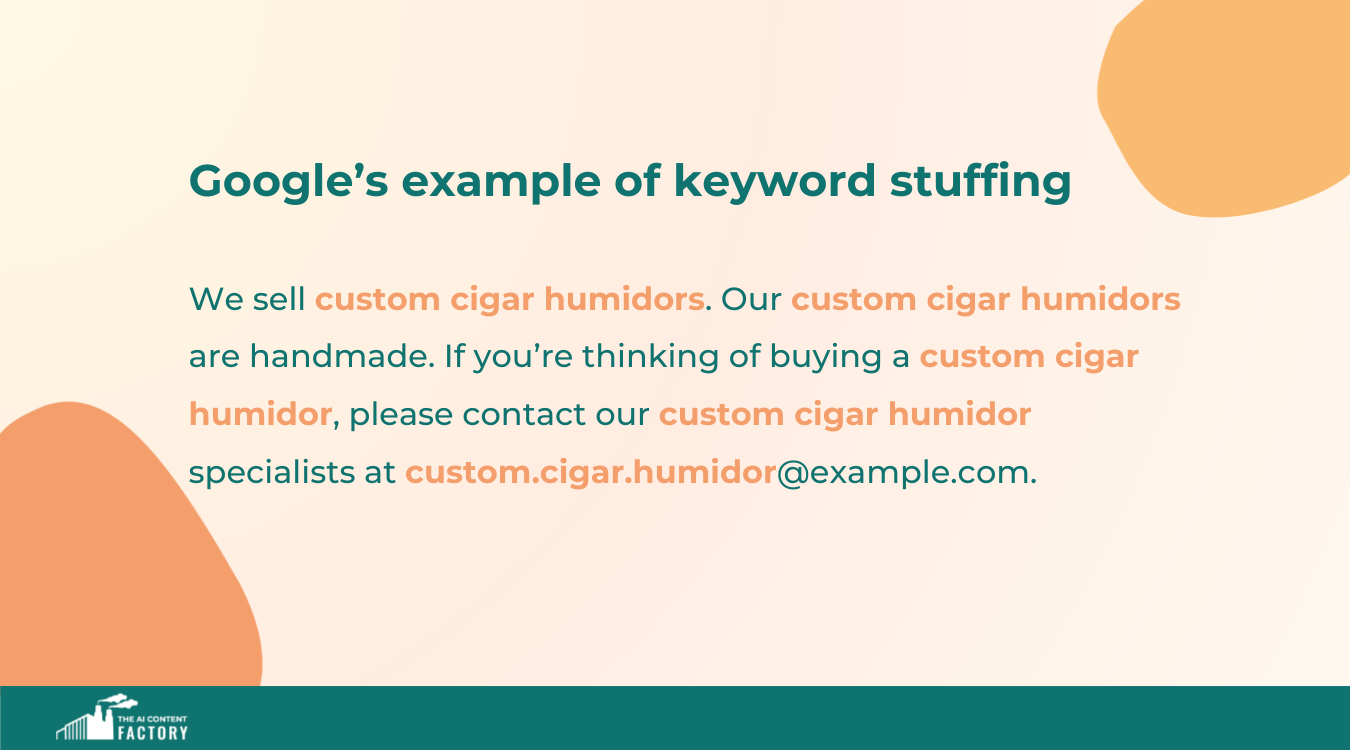
Stuffing keywords into thin, generic content might have worked a decade ago. Today, Google’s algorithms are sophisticated enough to reward depth, expertise, and genuine usefulness. If your content doesn’t answer a real question better than anything else on the internet, it won’t rank.
The second mistake is inconsistency. A business that publishes five articles in January and then nothing until April is sending a signal to both search engines and readers that the site is not a reliable resource. Consistency is more important than volume. Two high-quality articles per month, every month, will outperform ten articles in one month followed by silence.
The third mistake is ignoring distribution. Content marketing is not just content creation. Publishing an article and waiting for traffic to arrive is not a strategy. Every piece of content needs a distribution plan: which social channels will it be shared on? Will it be featured in the email newsletter? Are there relevant communities or forums where it would be valuable?
“The best marketing doesn’t feel like marketing.”
Tom Fishburne, Founder of Marketoonist
The fourth mistake is not measuring results. Without tracking the right metrics, it’s impossible to know what’s working. Many small businesses track vanity metrics like social media followers or page views, but fail to connect content activity to business outcomes like leads, conversions, and revenue. The metrics that matter are those that tie directly to business growth.
Building Your Content Engine: Key Formats and Examples
Variety is essential to keeping your audience engaged and catering to different preferences. While a blog is the foundation, a strong content strategy incorporates several formats.
The Power of Repurposing
Don’t create from scratch every time. A single, in-depth blog post can be repurposed into a dozen smaller pieces of content. This is a core principle of an efficient AI content strategy. A 2,500-word guide can become an infographic, a series of social media tips, a short video, and a section in your email newsletter — multiplying the value of a single investment.
Blog Posts and Articles are the cornerstone of content marketing. Use them to provide in-depth guides, answer customer questions, and target specific keywords. This is the best place to start, especially for businesses looking to build content marketing for startups from the ground up.
Case Studies are among the most persuasive formats available. They showcase how your product or service has helped a real customer achieve a specific result. This provides powerful social proof and builds immense trust, particularly in B2B contexts where purchase decisions are high-stakes.
Email Newsletters nurture leads and keep your business top-of-mind with your audience. Share your latest content, offer exclusive tips, and promote your services. Email marketing delivers an average $42 ROI per dollar spent when powered by quality content.[2]
Video Content is highly engaging and can deliver ROI 49% faster than text-based content.[2] Short tutorials, product demos, or customer testimonials are all effective formats. Video also increases the time visitors spend on your website, which is a positive signal for search engine rankings.
Infographics present data and complex information in a visually appealing and easily shareable format. They are particularly effective for social media and for earning backlinks from other websites.
Knowing how to use AI for content marketing can significantly accelerate the production of all these formats, but the strategic direction must always be human-led. AI is a production tool, not a strategy tool.
The Role of AI in Content Marketing for Small Businesses
Artificial intelligence has fundamentally changed the economics of content marketing for small businesses. Tasks that once required a full team — keyword research, content ideation, first drafts, social media adaptation — can now be completed in a fraction of the time. This is not a threat to quality; it’s an opportunity to scale.
The most effective approach is to use AI as a force multiplier. A small business owner who previously could only publish one article per month can now publish four, without sacrificing quality. The key is understanding where AI adds value and where human judgment is irreplaceable.
AI excels at research, structuring, and first drafts. It can analyze top-ranking content for a given keyword, identify gaps, and generate a structured outline in minutes. It can produce a first draft that covers the key points, which a human writer then refines, adds specific examples to, and injects with genuine expertise and brand voice.
Human judgment is irreplaceable for strategy, tone, and authenticity. An AI cannot know your specific customers, your brand’s unique perspective, or the nuances of your market. These are the elements that make content truly resonate. The best AI tools for content creation are those that augment human creativity rather than replace it.

For small businesses, this combination — AI efficiency plus human expertise — is the most powerful competitive advantage available. It allows you to produce the volume of content needed to build authority, while maintaining the quality needed to earn trust.
Measuring Success: How to Track Your Content Marketing ROI
While 83% of marketing leaders agree on the importance of demonstrating ROI, only 36% can accurately measure it.
This measurement gap is a major opportunity for data-driven small businesses. Tracking your ROI is not just about justifying your budget; it’s about understanding what works so you can double down on effective strategies.
The five metrics that matter most are:
- Organic Traffic: Use Google Analytics to monitor the number of visitors coming to your website from search engines. Consistent month-over-month growth in organic traffic is the clearest signal that your content strategy is working.
- Keyword Rankings: Use an SEO tool to track your position in search results for your target keywords. Improving rankings are a leading indicator of future traffic growth.
- Conversion Rate: What percentage of visitors who read your content take a desired action (e.g., fill out a contact form, subscribe to your newsletter)? This is the most direct measure of content’s business impact.
- Cost Per Lead (CPL): Calculate the total cost of producing and promoting your content, and divide it by the number of leads generated. Compare this to the CPL from other channels like paid advertising to demonstrate the efficiency of your content investment.
- Customer Lifetime Value (CLV) from Content-Sourced Customers: Track the total revenue generated from customers who first found you through content. This is the ultimate measure of content marketing’s contribution to business growth.
By focusing on these metrics, you can move beyond vanity metrics and demonstrate the real, bottom-line impact of your content. This is how you build a business case for continued investment and how to use AI for SEO to scale your efforts effectively.
The Final Word
Content marketing is not a quick fix or a marketing fad. It is a long-term, strategic approach to building a sustainable business. For small businesses, it represents the single most powerful opportunity to level the playing field, build a loyal audience, and drive profitable growth without being dependent on massive advertising budgets.
The data is clear: content marketing costs less, generates more leads, builds more trust, and delivers higher long-term ROI than any other marketing channel available to small businesses. The businesses that understand this and act on it consistently will build an asset that compounds in value over time, creating a durable competitive advantage.
The journey begins with a single, strategic piece of content. By following the framework laid out in this guide, you can move from being a small business that simply exists online to one that commands authority, earns trust, and attracts a steady stream of qualified customers.

0 Comments