
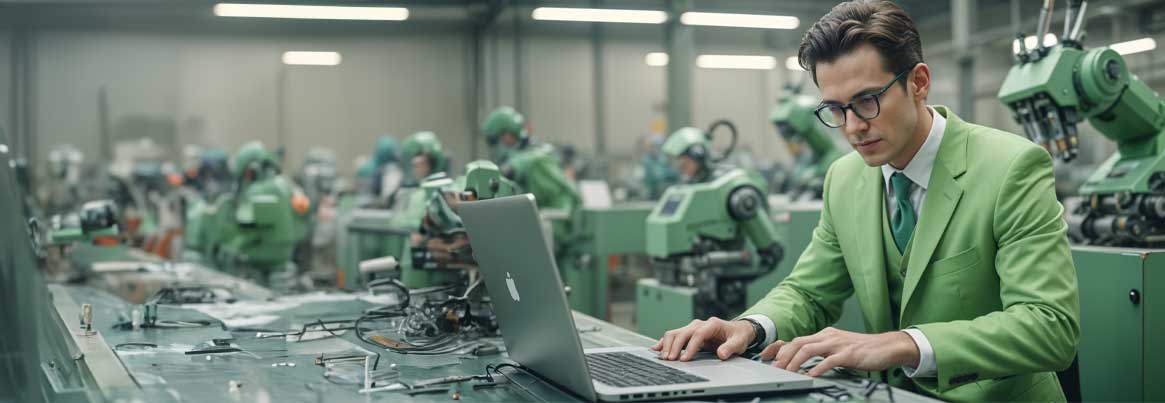
According to a report by MarketsandMarkets, the global digital twin market is expected to grow from USD 3.8 billion in 2019 to USD 35.8 billion by 2025, with a compound annual growth rate of 37.8%. These impressive figures reflect the growing adoption of emerging technologies such as IoT and cloud computing, as well as the increasing use of digital twins for predictive maintenance and process optimization.
What’s driving these numbers?
Digital twins provide a platform to test changes and improvements in a controlled environment—without the unforeseen consequences these might have in the physical world. This allows companies to increase efficiency and productivity, reduce costs, and optimize both products and processes.
In this article, we’ll break down the benefits, real-world applications, and challenges that digital twins face in today’s industry, offering a comprehensive overview of this transformative technology and its impact on manufacturing and other industrial sectors.
What Are the Challenges Faced by Manufacturing Plants?
A manufacturing plant is a company in itself: machinery, processes, quality control, management, employees, procurement, sales—countless elements that can undergo changes at any given moment. Just to name a few, these are some of the most significant challenges a production plant may face:
Current Challenges in Production Planning
Due to the complexity and constant change in modern industrial environments, the challenges manufacturing plants face are as broad as their operations.
One of the most pressing issues is the need to accurately predict and manage market demand, which is essential to avoid both overproduction and stock shortages. Additionally, integrating and coordinating various departments and processes within the factory is often difficult, leading to inefficiencies and bottlenecks.
Problems Caused by the Lack of Accurate and Predictive Data
The lack of accurate and predictive data is another major obstacle in production planning. Without precise information on machine performance, inventory levels, and market demand, factories are often forced to rely on estimates that may be far from reality. This can result in suboptimal decisions, such as poor production scheduling, inefficient use of resources, and the inability to anticipate and prevent equipment failures.
Impact of These Issues on Efficiency and Costs
The problems mentioned above have a direct impact on a factory’s operational efficiency and overall costs. Inefficient planning can lead to increased downtime, material and energy waste, and last-minute adjustments that drive up operational expenses.
Furthermore, the inability to anticipate equipment failures can result in unexpected production stoppages, which negatively affect the factory’s ability to meet delivery deadlines and satisfy customer demand.
With humanized IA content and start positioning your brand in search engines.
The Solution? A Digital Twin
The term sounds incredibly sophisticated—and it is. But what exactly is a digital twin, and how is it created?
A digital twin is a virtual replica of a physical system or process, used to simulate, analyze, and optimize operations in real time. It works by collecting data from sensors and other sources in the physical environment and using that data to create a digital model that mirrors the behavior of the real system.
This model can then be used to test different scenarios, predict outcomes, and make informed decisions without the risk of disrupting actual operations.
How Do Digital Twins Help with Factory Planning and Management?
Digital twins offer numerous advantages when it comes to planning and managing manufacturing plants. First, they give companies a comprehensive, real-time view of their operations, making it easier to make smart, data-driven decisions.
They can also simulate different scenarios to determine the best way to optimize production, manage inventory, and allocate resources. Imagine wanting to introduce changes to machines, shifts, or test the efficiency of a new piece of equipment in a complex production line—why spend thousands of euros when you can predict the impact in a virtual environment?
Finally, digital twins help predict and prevent equipment failures, reducing downtime and lowering maintenance expenses.

Examples of How a Digital Twin Can Improve Factory Planning
Let’s get straight to the point—what can a digital twin actually do for your production plant?
Imagine you’re managing an entire facility and want to improve efficiency. Here are just some of the ways a digital twin can help:
• Time Estimates: A digital twin can simulate the production process of a new product to accurately estimate the time required for each stage, enabling more efficient scheduling.
• Material Requirements: By analyzing production data and market demand, a digital twin can forecast material needs and optimize inventory management, helping avoid both overstock and stockouts.
• Machine Failure Management: Using historical data and predictive algorithms, a digital twin can anticipate potential equipment failures and recommend preventive actions—maximizing machine availability and minimizing disruptions.
With to the next level with our Instagram, Twitter, and LinkedIn content plans
• Production Planning and Sequencing Optimization: Imagine being able to experiment with planning and sequencing as easily as moving pieces in a simulation. You could evaluate how different production line setups affect efficiency and cycle times, reducing downtime and maximizing output. Digital twins can also simulate market demand shifts to help you plan production more accurately and adaptively.
• Demand Peaks and Overproduction Management: In times of high demand, a digital twin can help quickly adjust production without compromising quality or efficiency. By simulating different production strategies, factories can identify the best way to temporarily ramp up output. Additionally, digital twins can forecast future demand based on historical data and market trends, preventing overproduction and reducing waste.
• Energy Efficiency and Resource Management: Digital twins provide detailed insights into a factory’s energy consumption, enabling smarter energy management. For example, they can detect peak usage times and suggest adjustments to operating hours to lower energy use.
They can also optimize the use of water and raw materials, cutting costs and improving sustainability.
• Product Configuration Decision-Making: Finally, a digital twin doesn’t just rely on real-world data like sensors and production history—it can also integrate user knowledge and production data to improve product configuration. For instance, you can simulate how different setups affect product quality and performance, helping engineers make informed design and manufacturing decisions.
This is especially valuable now that mass customization has become the norm in many industries. In fact, Deloitte’s report “Made-to-order: The rise of mass personalisation” highlights that over 50% of consumers expressed interest in purchasing personalized products or services.
Competitive Advantages of Digital Twins
Beyond improving factory efficiency, a digital twin can be a valuable competitive asset in a market where rising operational costs are constantly threatening to push your customers toward competitors.
So, what can a digital twin offer to help you stand out? Take note:
Improved Operational Efficiency and Cost Reduction
A digital twin enhances factory management, which translates directly into lower operational costs. It allows for better time management, optimal resource use, and the elimination of inefficiencies. You’ll be able to quickly identify areas for improvement and adjust operations accordingly.
Bottleneck Detection and Resolution
Digital twins make it easier to spot and resolve production bottlenecks by offering a clear, detailed view of the entire process. By simulating different scenarios, factories can predict where bottlenecks are likely to occur and develop strategies to prevent them before they impact output—streamlining workflow and boosting overall plant efficiency.
Adaptability and Customization Across Industries and Facilities
One of the greatest advantages of digital twins is their adaptability and scalability across different industries and manufacturing environments. They can be tailored to replicate any kind of operation—from high-precision aerospace manufacturing to mass production in the automotive industry. This flexibility allows companies in diverse sectors to benefit from digital twin technology, regardless of the specific nature of their processes.
In Summary
Digital twins are a powerful and versatile tool that can fundamentally transform how factories plan, manage, and optimize their operations. By providing a detailed and predictive view of production processes, they help businesses improve efficiency, reduce costs, and maintain a competitive edge in an increasingly demanding and fast-paced market.

0 Comments